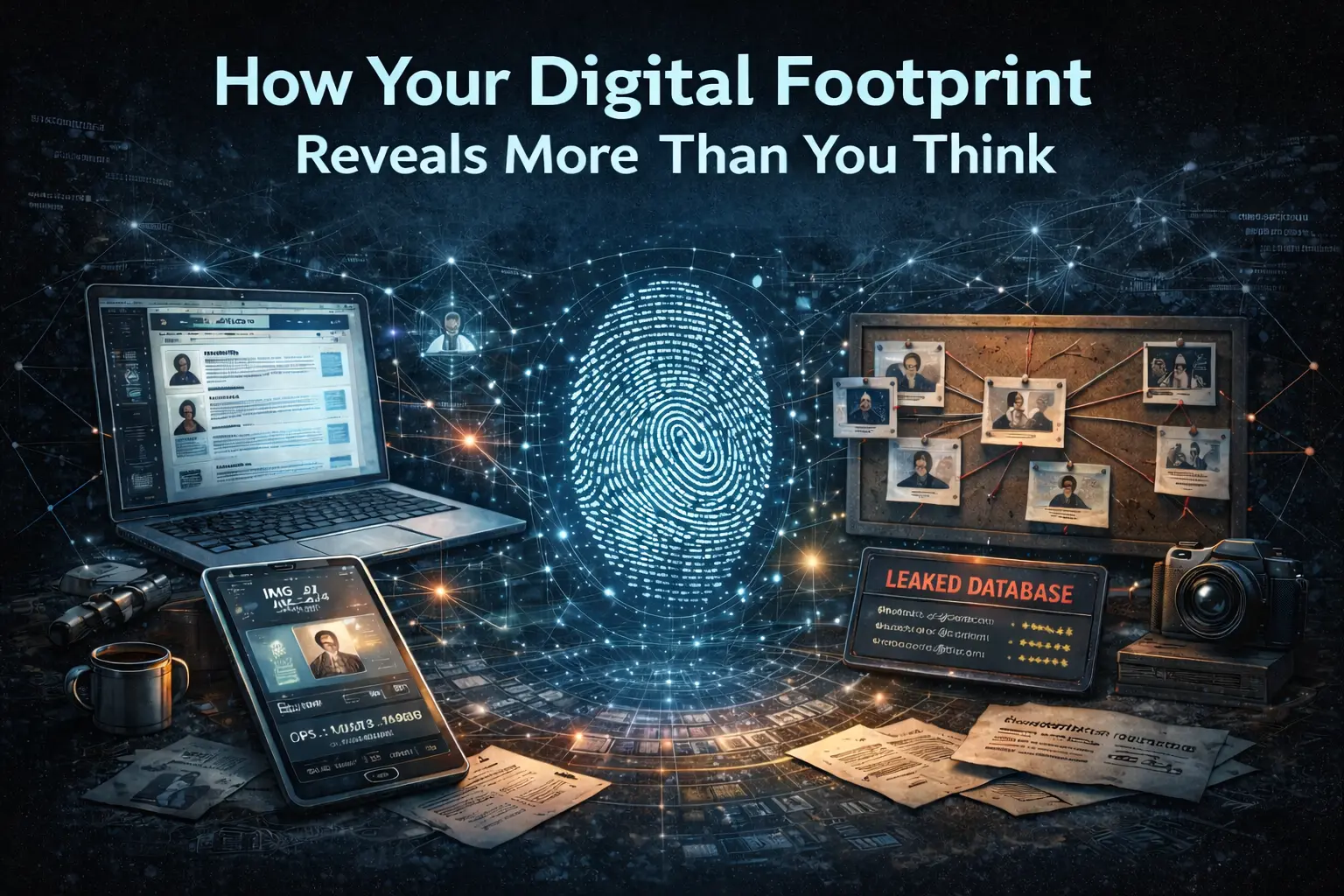
How Your Digital Footprint Reveals More Than You Think
Every action you take online leaves information behind. Not hidden, not encrypted, just publicly accessible data that most people never think to look for.
In OSINT (Open Source Intelligence), these traces are the foundation of investigation. Analysts, researchers, and everyday users can uncover surprising amounts of information using nothing more than public data and patience.
Despite this, OSINT is often misunderstood. Many assume it requires elite technical skills or illegal access. In reality, it relies on curiosity, pattern recognition and knowing where to look.
1. Your Username Is the Key to Your Online Identity
A unique username reused across platforms is one of the biggest OSINT goldmines.
Across platforms, a single handle can reveal:
- Linked social media accounts
- Forum posts from 10 years ago
- Gaming profiles
- Leaked datasets
- Email patterns
- Behavioral traits
Most people reuse usernames for convenience, not realizing how easily those identities can be connected. What feels anonymous on one platform often isn’t when viewed in context.
With tools like DeepFind.me's Profile Analyzer, you can build a full profile of a person’s digital life, all starting from a single alias.
2. Metadata: The Silent Snitch
Images, PDFs, and even Excel files quietly store hidden information, such as:
- GPS coordinates
- Device names
- Software versions
- Timestamps
- Author names
- Modification history
One accidentally uploaded photo can expose someone’s location or workplace. Metadata is like the fingerprint no one realizes they’re leaving behind.
Understanding what your files expose is one of the simplest ways to reduce unnecessary risk.
3. Social Graphs Reveal Patterns, Not Just People
People reveal themselves through connections:
- Followers
- Friends
- Likes
- Comments
- Public groups
By mapping interactions, you can identify close relationships, social circles, influence patterns and even private behavior that isn't explicitly stated.
This is why OSINT analysts love graph databases because they show you the "shape" of a person’s digital world.
4. Visual Clues in Photos: Context Is Everything
The background of an image often contains more information than the subject.
Common visual signals include:
- Landmarks
- License plates
- Street signs
- Reflections in windows
- Bedroom layouts
- Clothing brands
- Time of day and weather patterns
When combined with open geolocation data, these clues can narrow down where and when an image was taken, sometimes with surprising precision.
This kind of analysis doesn’t rely on advanced tools, just careful observation.
5. Leaked Databases: The Silent Archive
Billions of emails, passwords, usernames, and phone numbers are leaked across the internet. Publicly available breach data acts as an unintended archive.
OSINT analysts use them to find:
- Old accounts
- Alias history
- Past breaches
- Real identity connections
- Patterns in password creation
This isn’t about exploiting leaks but understanding how information persists long after people assume it’s gone.
Once data is public, it rarely disappears.
How DeepFind.Me Fits Into This
DeepFind.Me exists to bring these techniques together in one place.
Instead of juggling disconnected tools and workflows, the platform helps users explore usernames, metadata, files, domains, and public exposure in a structured way. The goal isn’t automation for its own sake—it’s clarity.
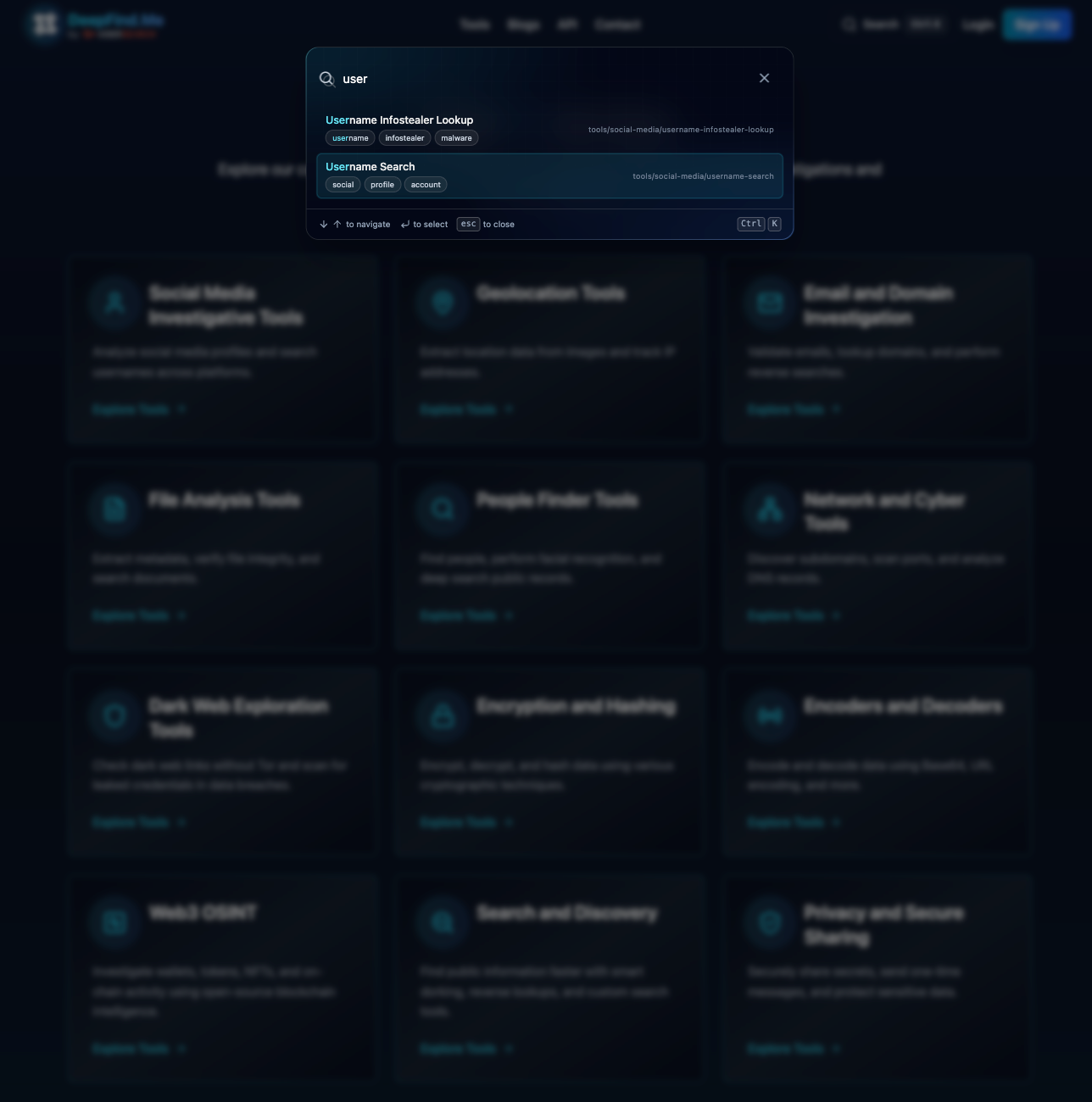
By making OSINT more accessible and understandable, DeepFind.Me helps users see what’s already visible and decide what to do next.
Conclusion
Your digital footprint tells a story, one that can be pieced together by anyone with the skills and tools to look. OSINT isn’t magic; it’s the process of connecting publicly available information into something meaningful.
In a world where your online presence functions as a second identity, understanding OSINT is no longer optional but essential.